

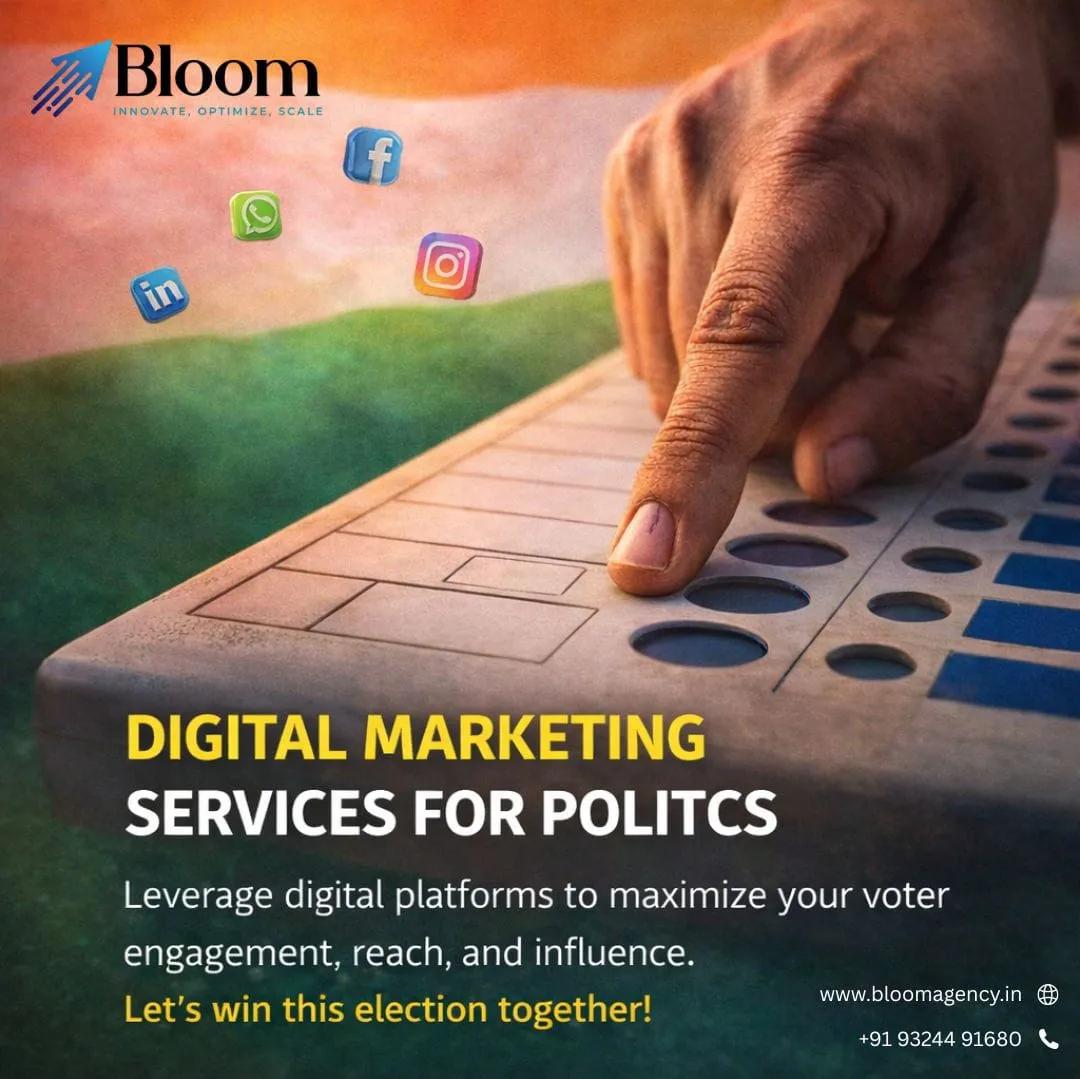
Political Marketing Agency
Political communication has changed significantly with the growth of digital media. Political organizations, candidates, public representatives and campaign teams now use websites, social media, digital advertising, content and online engagement to communicate with audiences at scale.
A professional political marketing agency can help organize these activities into a structured digital strategy. Instead of relying on a single communication channel, modern campaigns can combine political branding, social media, content marketing, website development, search visibility and digital outreach.

What Is a Political Marketing Agency?
A political marketing agency provides marketing, communication and digital services designed for political organizations and campaigns.
The work can include developing a candidate's digital identity, managing social media communication, creating campaign websites, producing content, developing visual branding and monitoring online engagement.
The objective is to create a consistent digital presence while ensuring that campaign communication remains clear and relevant to the intended audience.
Political Digital Marketing Agency Services
A political digital marketing agency can provide a range of services depending on campaign requirements.
Political Website Development
A campaign website can serve as a central source of information.
It may include information about the candidate or organization, campaign priorities, public initiatives, announcements, events, contact information and media resources.
A well-structured website should also work effectively on mobile devices because many users access political information through smartphones.
Political Social Media Marketing
Social media has become an important communication channel for political organizations.
A political social media agency can develop content calendars, creative concepts, short-form videos, informational posts and campaign updates.
Different platforms can require different communication formats. Short videos, graphics, longer explanations and live interactions can all play different roles in a digital communication strategy.
Political Branding
Political branding goes beyond a logo or campaign colour.
A political branding agency can help establish a consistent visual and communication identity across websites, social media profiles, campaign materials and digital advertisements.
Brand consistency can make campaign communication easier to recognize and help create a unified public presence.
Political Content Marketing
Content plays an important role in communicating ideas and information online.
Campaign content may include:
Website articles
Candidate profiles
Public announcements
Policy explainers
Videos
Infographics
Social media posts
Event updates
Frequently asked questions
Content should be easy to understand and adapted to the platform where it is published.
Why Political Campaigns Need a Digital Strategy
People consume information across multiple digital channels. A campaign that only maintains a social media account may miss opportunities to build a broader digital presence.
A coordinated strategy can connect the website, social media channels, search visibility, video content and other digital assets.
For example, an announcement published on a campaign website can be supported through social media posts and video content. This creates multiple ways for audiences to discover and engage with the same information.
Political Marketing Company and Campaign Planning
A political marketing company can help campaign teams structure their digital activities around clear objectives.
A typical planning process may include:
Research
Understanding the campaign's communication environment, audience interests, existing digital presence and competing messages.
Strategy
Developing a content, branding and digital communication framework.
Content Creation
Producing written, visual and video content appropriate for different platforms.
Distribution
Publishing content through relevant digital channels and maintaining a consistent schedule.
Measurement
Reviewing website traffic, engagement, content performance and other permitted campaign metrics.
Building a Strong Political Brand Online
Consistency is particularly important when managing multiple digital platforms.
The campaign website, social media profiles, graphics and video content should follow a recognizable visual identity.
Important branding elements can include:
Logo
Typography
Visual templates
Photography style
Graphic design
Tone of communication
Website design
Social media presentation
A consistent identity makes it easier for people to distinguish official campaign communication from unrelated online content.
Social Media Content for Political Organizations
Political social media requires a balance between timely communication and planned content.
A content calendar can include different categories such as:
Information: Updates, announcements and factual information.
Engagement: Questions, discussions and community-focused content.
Education: Explainers that make complex subjects easier to understand.
Events: Information about public meetings, appearances and activities.
Video: Short videos, interviews and other visual formats.
A structured content mix can prevent social media channels from becoming repetitive.
Search Engine Optimization for Political Websites
Search engine optimization can help people discover publicly available information through search engines.
A political website can be optimized around relevant informational searches while maintaining accurate and useful content.
Important areas include:
Technical SEO
Page structure
Mobile optimization
Internal linking
Metadata
Website speed
Structured data where appropriate
Informational content
Local and regional pages where relevant
Search optimization should focus on useful information rather than simply repeating keywords.
The Role of Video in Political Digital Marketing
Video has become an important digital communication format.
Short-form videos can communicate announcements, explain initiatives, document events or introduce campaign messages in an easily consumable format.
Longer videos can provide interviews, speeches, discussions and detailed explanations.
A political digital strategy can use different video formats depending on the platform and communication objective.
Reputation and Online Communication
Online conversations can develop quickly, making reputation monitoring an important part of digital communication.
Campaign teams can monitor publicly available conversations, identify frequently discussed topics and respond with accurate information where appropriate.
The emphasis should remain on transparent and factual communication rather than misleading claims or manipulated information.
Data, Privacy and Platform Compliance
Political digital marketing requires particular attention to privacy, advertising rules and platform policies.
Campaign teams should use data responsibly, obtain appropriate permissions where required and follow applicable laws and advertising regulations.
Digital campaigns should also respect the rules of individual advertising and social media platforms.
Measuring Digital Campaign Performance
A digital strategy should be measured using meaningful indicators.
Depending on the campaign, these can include:
Website visits
Search visibility
Video views
Social engagement
Content reach
Event registrations
Website enquiries
Returning visitors
Engagement with informational content
Measurement helps campaign teams understand which communication formats are working and where improvements may be required.
Choosing a Political Marketing Agency
When selecting a political marketing agency, campaign teams should consider its digital expertise, content capabilities, branding experience, technical skills and understanding of platform requirements.
A strong agency should be able to connect multiple digital activities rather than treating website development, social media, branding and content as completely separate functions.
It is also important to establish clear approval processes, communication responsibilities, reporting methods and compliance requirements before beginning a campaign.
Conclusion
Political communication increasingly depends on a strong and coordinated digital presence. A professional political marketing agency can bring together website development, political branding, social media, content marketing, search optimization and digital strategy.
For political organizations and campaign teams, the goal should be to create a reliable digital information ecosystem where audiences can easily find official information, understand campaign communication and engage through appropriate channels.
A thoughtful combination of technology, content, branding and responsible digital communication can create a stronger online presence while maintaining transparency and compliance.