

seo company india
Choosing the right SEO company in India can play an important role in improving a business’s online visibility, attracting qualified visitors, and generating consistent organic leads. With businesses competing across Google Search and increasingly AI-powered search experiences, SEO has evolved beyond simply adding keywords to webpages.
A professional SEO strategy combines technical optimization, high-quality content, keyword research, website improvements, authority building, and continuous performance analysis. Current industry listings show that Indian SEO agencies offer a wide range of specializations, from technical and local SEO to ecommerce and AI-search optimization.

Why Businesses Need SEO Services in India
India has a highly competitive digital market, with businesses targeting customers locally, nationally, and internationally. Whether a company operates in Mumbai, Delhi, Bengaluru, Pune, Hyderabad, or serves customers across the country, organic search can become an important source of sustainable website traffic.
SEO services in India can help businesses:
Improve organic search visibility
Target relevant commercial keywords
Increase qualified website traffic
Improve website usability and technical performance
Build topical authority through useful content
Generate organic leads and enquiries
Strengthen local search presence
Improve ecommerce product visibility
The objective should not be to achieve rankings for keywords alone. A successful SEO campaign connects search visibility with meaningful business outcomes such as enquiries, sales, registrations, or qualified leads.
What Does an SEO Agency in India Do?
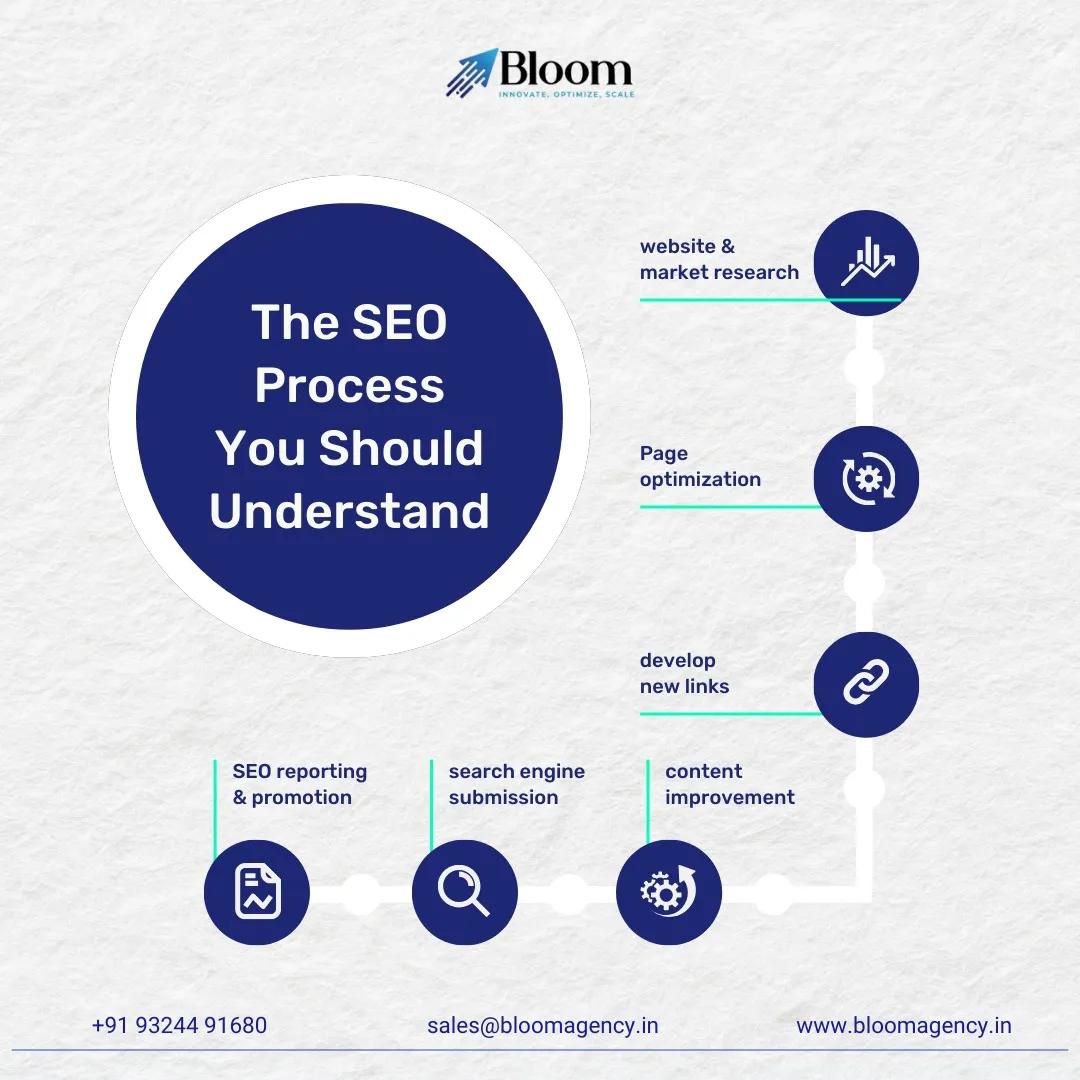
An experienced SEO agency in India typically begins with an assessment of the website, competitors, target audience, existing rankings, and business objectives.
The campaign can then include several areas of optimization.
Technical SEO
Technical SEO focuses on making a website easier for search engines to crawl, understand, and index. Common activities include improving website architecture, fixing crawl issues, optimizing page speed, reviewing XML sitemaps, implementing structured data, resolving indexing problems, and improving Core Web Vitals.
Keyword Research
Keyword research identifies the phrases potential customers use when searching for products and services. Instead of focusing only on high-volume keywords, an effective strategy considers search intent, competition, relevance, and conversion potential.
On-Page SEO
On-page optimization includes improving title tags, meta descriptions, headings, URLs, internal links, content structure, images, and page copy.
Each important landing page should have a clear purpose and provide useful information that satisfies the searcher's intent.
Content Marketing
Content is an important part of modern SEO. Businesses can create service pages, industry guides, comparison articles, FAQs, case studies, and educational resources around relevant search topics.
Consistently publishing useful and original content can help establish topical authority while creating additional opportunities to rank for long-tail searches.
Link Building and Digital Authority
Quality backlinks can support a website's authority when they come from relevant and trustworthy sources. A sustainable link-building strategy should prioritize relevance, editorial value, and natural references rather than relying on large volumes of low-quality links.
Local SEO
For businesses serving specific locations, local SEO can help improve visibility for location-based searches. Optimization may include Google Business Profile management, local landing pages, citations, reviews, and locally relevant content.
Ecommerce SEO
Ecommerce businesses require specialized optimization for category pages, product pages, filters, internal linking, structured data, and commercial search queries. The strategy should help shoppers discover products while also making the website technically accessible to search engines.
SEO for Google and AI Search
Search behavior is changing as users increasingly interact with AI-generated answers alongside traditional search results. Modern SEO strategies can therefore incorporate AEO and GEO approaches alongside conventional optimization.
Some agencies now focus on making content understandable and useful not only for Google but also for AI-driven search experiences such as Google AI Overviews and conversational platforms.
This means businesses should focus on authoritative information, clear answers, strong topical coverage, structured content, and trustworthy sources rather than relying exclusively on keyword repetition.
How to Choose an SEO Company in India
Before hiring an SEO provider, businesses should evaluate several factors.
Review the SEO Strategy
Ask how the agency plans to improve rankings and traffic. A credible strategy should be customized to the website, industry, competition, and business objectives.
Check Reporting
Monthly reporting should provide more than a list of keyword positions. Look for information about organic traffic, conversions, technical improvements, content performance, backlinks, and completed activities.
Understand the Scope
Clarify whether the package includes technical SEO, content writing, on-page optimization, link building, local SEO, reporting, and strategy.
Avoid Unrealistic Promises
No legitimate SEO agency can guarantee a specific Google ranking or a fixed result within an unrealistic timeframe. SEO performance depends on competition, website history, search demand, content quality, technical factors, and many other variables.
SEO Company vs SEO Freelancer
A freelancer can be suitable for businesses with limited requirements or a smaller website. An SEO company may be more appropriate when a business needs multiple specialists working across technical SEO, content, development, analytics, and authority building.
The right choice ultimately depends on the complexity of the project, budget, expected deliverables, and level of expertise required.
Measuring SEO Success
The success of an SEO campaign should be measured using business-focused metrics.
Important indicators include:
Organic sessions
Qualified organic traffic
Keyword visibility
Search impressions
Click-through rate
Organic leads
Ecommerce transactions
Conversion rate
Revenue from organic search
Growth in non-branded search traffic
Ranking improvements are useful, but they should be considered alongside traffic and conversions.
Building Long-Term Organic Growth
SEO is a long-term marketing channel. Technical improvements may produce relatively quick gains in some situations, while competitive keywords and new content often require sustained optimization and authority building.
Businesses that invest in useful content, technical quality, user experience, and trustworthy authority signals can create a stronger foundation for long-term organic growth.
Conclusion
A reliable SEO company in India should provide more than keyword rankings. The right partner should understand the business, develop a customized strategy, improve the website, create useful content, build authority, measure performance, and continuously adapt to changes in search.
Whether a business needs local SEO, ecommerce optimization, national SEO, technical SEO, or AI-search visibility, selecting an experienced and transparent SEO partner can