

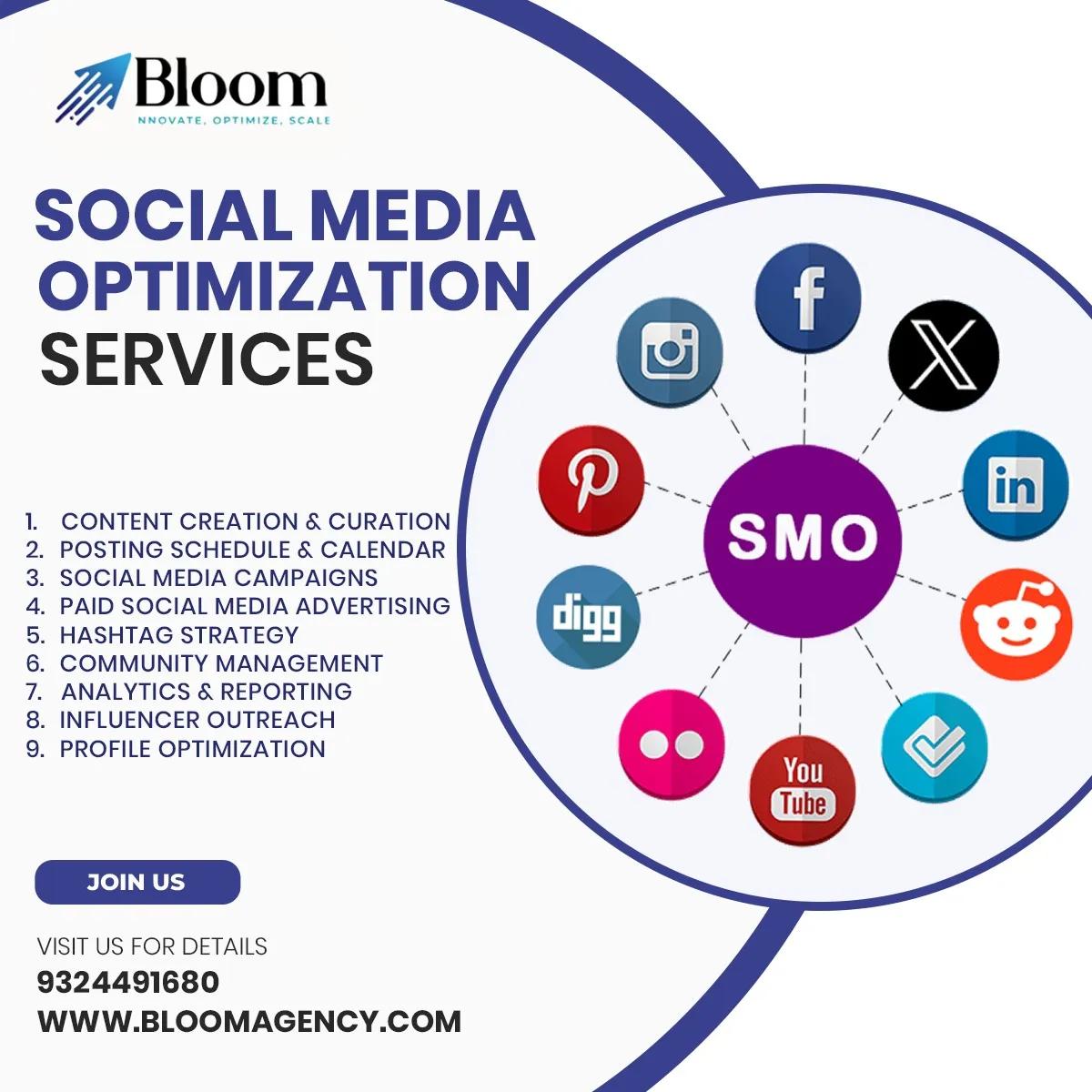
smo services
Social media has become an important channel for businesses to communicate with customers, share information and develop brand awareness. Platforms such as Instagram, Facebook, LinkedIn and YouTube allow companies to reach different audiences through content, conversations and digital communities.
However, maintaining an effective social media presence requires more than publishing regular posts. Businesses need a clear strategy, relevant content, consistent branding and meaningful audience engagement.
Social media optimisation services help businesses improve how they use these platforms, strengthen their online presence and create opportunities for long-term customer relationships.
Understanding Social Media Optimisation
Social media optimisation, commonly called SMO, involves improving a business's social media profiles, content and engagement strategies to make its online presence more effective.
The process focuses on helping people discover a brand, understand its offerings and interact with its content.
SMO Services can include:
Optimising social media profiles and business information.
Developing a consistent content strategy.
Improving content discoverability.
Encouraging meaningful audience engagement.
Monitoring social media performance.
Aligning social media activity with business objectives.
Unlike paid advertising, which relies on an advertising budget to distribute content, organic social media optimisation focuses on improving the effectiveness of a brand's regular social media activity. Both approaches can work together as part of a broader digital marketing strategy.
Why Businesses Need a Social Media Strategy
A well-planned social media presence can help businesses maintain communication with customers and share information about their products, services and industry.
For example, an educational institution may use social media to share campus activities, admission information and student achievements. A real estate company may publish property updates, project videos and information about neighbourhoods.
A focused strategy helps businesses:
Build brand awareness: Consistent and relevant content can help audiences become familiar with a business.
Improve audience engagement: Useful posts, discussions and responses can encourage customers to interact with a brand.
Share valuable information: Businesses can communicate updates, product information, industry insights and customer resources.
Support website traffic: Relevant social media content can direct interested audiences to detailed information on a business website.
Understand customer interests: Engagement patterns and audience feedback can reveal which topics are most relevant to followers.
Important Social Media Optimisation Activities
1. Social Media Profile Optimisation
A business profile is often the first point of contact between a company and a potential customer.
Profile optimisation involves making the business information clear, accurate and consistent across platforms.
Important elements include:
A recognisable business name and logo.
A clear description of products or services.
Relevant contact information.
Appropriate website links.
Consistent brand messaging.
Suitable profile and cover images.
The objective is to help visitors understand what the business offers and how they can learn more.
2. Content Strategy and Planning
Content planning helps businesses maintain a consistent and relevant social media presence.
An effective content strategy considers the audience, platform, business objectives and topics that customers find useful.
Different content formats can serve different purposes.
Educational content: Explains industry concepts, answers common questions and shares useful knowledge.
Brand content: Communicates company values, team activities and business developments.
Product or service content: Presents offerings, features and relevant information.
Interactive content: Encourages conversations through questions, polls and discussions.
Visual content: Uses photographs, illustrations, videos and infographics to communicate information effectively.
Content should provide genuine value rather than relying entirely on promotional messages.
3. Platform-Specific Optimisation
Each social media platform has different audiences, formats and content discovery mechanisms.
Instagram can be useful for visual storytelling, short videos and brand presentation.
Facebook supports community interaction, business updates and a variety of content formats.
LinkedIn is particularly relevant for professional communication, industry insights and business-to-business content.
YouTube can support detailed educational videos, product demonstrations and longer-form storytelling.
Businesses should select platforms based on their audience and objectives rather than attempting to maintain every available channel.
4. Social Media Engagement
Engagement is an important part of maintaining an active social media presence.
Businesses can improve audience interaction by responding to relevant comments, addressing customer questions and participating in appropriate discussions.
Social listening can also help businesses understand customer concerns, identify frequently asked questions and monitor conversations related to their industry.
Engagement should be genuine and consistent. Artificially increasing follower counts or using automated interactions that provide little value does not establish meaningful customer relationships.
Social Media Optimisation and Search Visibility
Social media and search engine optimisation serve different purposes, but they can support each other.
Social platforms help businesses distribute content and introduce audiences to useful information. These interactions may encourage people to visit the website, search for the brand or reference its content elsewhere.
For example, an educational article published on a company website can be adapted into an informative LinkedIn post, an Instagram carousel or a short video.
This approach allows businesses to communicate the same underlying information through different formats while directing interested audiences to the original resource.
Social media activity should not be treated as a guaranteed way to improve Google rankings. Its value lies in content distribution, brand discovery, audience engagement and potential referral traffic.
Measuring Social Media Performance
Social media optimisation should be evaluated through metrics that reflect the business's objectives.
Metric | What it indicates |
|---|---|
Reach | Number of unique accounts exposed to content |
Impressions | Total number of content displays |
Engagement rate | Audience interactions relative to a defined measurement |
Profile visits | Interest in the business profile |
Website clicks | Traffic directed to the business website |
Enquiries | Leads generated through social media activity |
Audience growth | Change in followers over time |
The meaning of each metric depends on the platform and reporting method.
For example, a campaign designed to build brand awareness may focus on reach and engagement, while a campaign intended to generate enquiries should also evaluate website visits, form submissions and qualified leads.
Common Social Media Optimisation Mistakes
Businesses may struggle to achieve meaningful results when their social media activity lacks a clear direction.
Common mistakes include publishing content without understanding the audience, using identical content across every platform, relying entirely on promotional posts and ignoring customer comments.
Another issue is focusing exclusively on follower growth without evaluating whether the audience is relevant to the business.
A more effective strategy uses consistent branding, useful content, platform-appropriate formats and regular performance reviews.
How Bloom Agency Supports Social Media Marketing
Bloom Agency is a Mumbai-based digital marketing agency offering online marketing services to businesses across different industries.
Its social media marketing activities can include content planning, social media profile management, creative development, audience engagement and campaign performance monitoring.
The appropriate strategy depends on the company's industry, audience, platforms and marketing objectives.
By connecting social media activity with broader digital marketing goals, businesses can develop a more consistent online presence and improve how they communicate with customers.
Conclusion
Social media optimisation is an ongoing process that combines profile improvements, content planning, audience engagement and performance measurement.
Businesses that focus on relevant information, consistent communication and genuine customer interactions can create a more useful social media presence.
The objective is not simply to publish more posts or increase follower counts. It is to build meaningful connections with the right audience and support the business's broader marketing goals through effective social media communication.